Most hotel owners assume their CPA understands the hotel business.
That assumption is costing them money. Not because their CPA is careless. But because hotel accounting is a genuine specialty, and most general practice CPAs handle one or two hotel clients a year. That's not enough volume to develop fluency in the positions that actually move the needle.
Here's what the gap looks like in practice.
The Cost Segregation Conversation That Never Happens
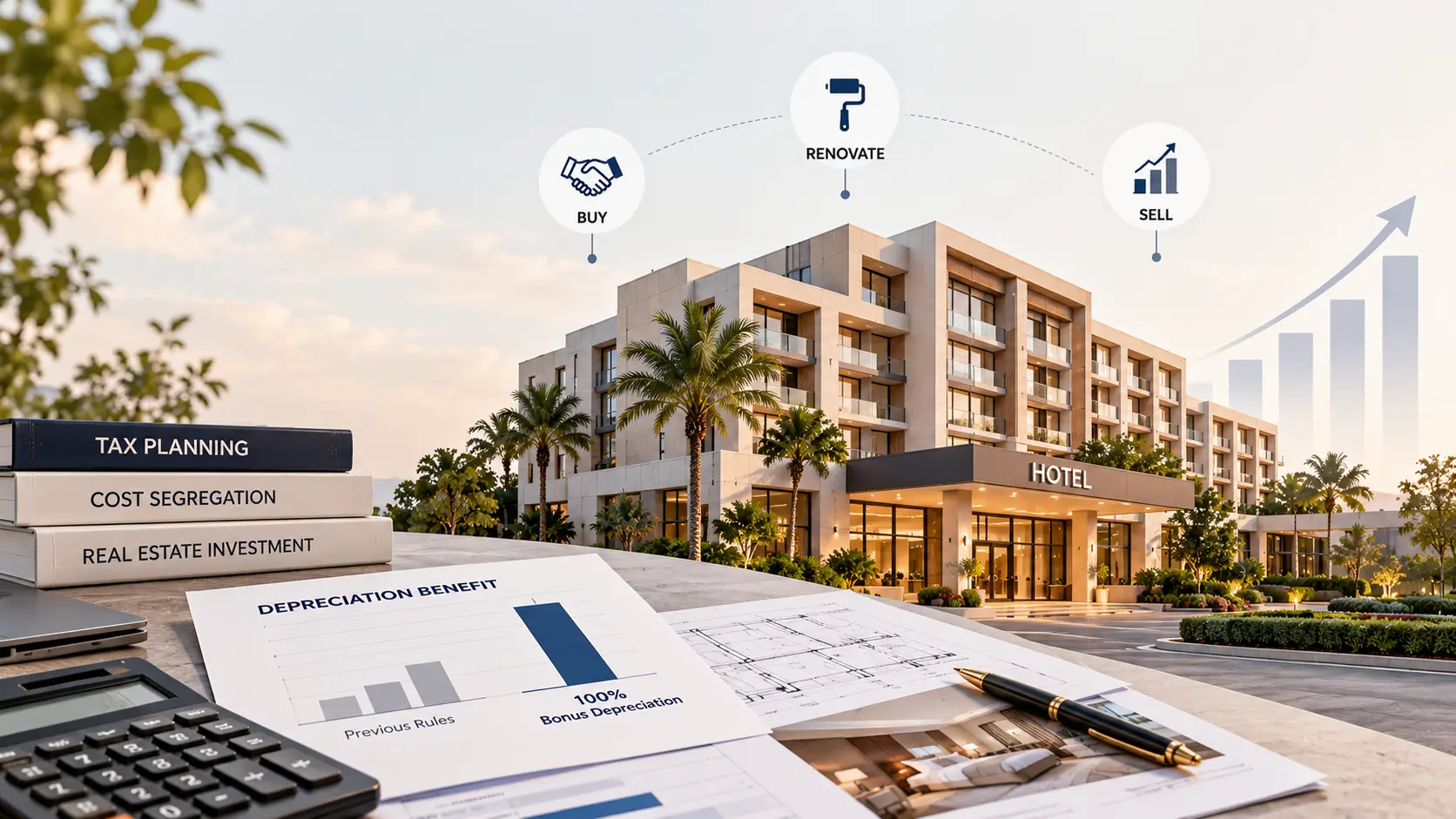
A hotel is one of the most depreciation-rich assets a business owner can hold. The components (HVAC systems, specialized flooring, land improvements, personal property embedded in the structure) qualify for accelerated depreciation treatment under IRC Section 168 when properly reclassified.
A cost segregation study identifies which assets can be moved from 39-year straight-line depreciation into 5-year, 15-year, or land improvement property. The tax savings over the first five years of ownership can be substantial.
But the study has to be done correctly. The asset reclassification has to be defensible. The bonus depreciation election has to be timed deliberately.
Most hotel owners have never had this conversation with their CPA in specific terms. They know depreciation exists. They don't know how much they've left behind.
The reason is usually not complexity on the owner's side. It's that the CPA who prepared the return didn't specialize in this return type often enough to bring the conversation proactively.
The FICA Tip Credit No One Claimed
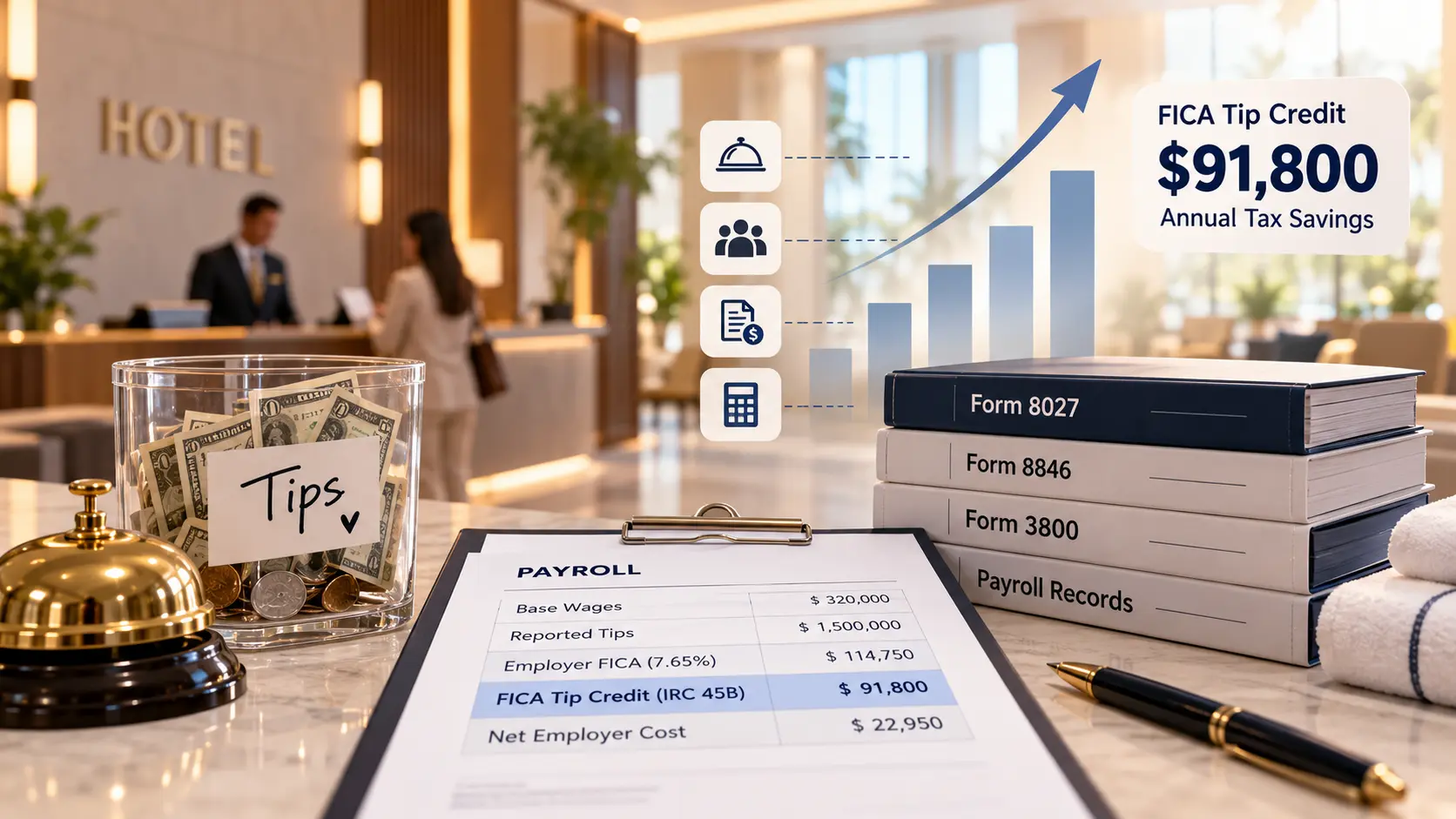
Hotels with tipped staff, such as servers, bartenders, and banquet employees, are eligible for a credit under IRC Section 45B that recovers the employer's share of FICA taxes on tips above the federal minimum wage.
This is not an obscure provision. It's been in the code for decades. But it requires accurate reconciliation of Form 8027, which tracks reported versus allocated tips by establishment. When the reconciliation isn't done correctly, the credit doesn't get claimed, or gets claimed incorrectly, which creates a different problem.
In a year when industry wages are approaching $131 billion nationally, the dollar value of this credit is material. Hotels operating at scale, in markets where tipped wages are high, should be claiming this every year without exception.
Many aren't. The question worth asking your CPA: did we run the FICA tip credit analysis this year, and what did it produce? If they need time to look it up, that's information.
The USALI Question
The Uniform System of Accounts for the Lodging Industry is the standard financial reporting framework for hotels. It's how operators, lenders, and buyers read hotel P&Ls. It's how performance benchmarking works. It's how due diligence gets done.
A hotel whose books are maintained under USALI-structured reporting is easier to finance, easier to sell, and easier to advise.
A hotel whose books are maintained however the general-practice CPA has always done it is harder to compare, harder to underwrite, and harder to value accurately.
Most hotel owners don't know to ask for USALI-structured reporting. Most general-practice CPAs don't know to offer it.
This is the structural mismatch that creates problems at the exact moments it matters most: when the owner wants to refinance, when a buyer wants a quality of earnings review, when a lender wants prior-year comparables.
What the Right CPA Relationship Actually Looks Like
The right CPA for a hotel client proactively runs the cost segregation analysis and explains the election options before the return is due, not after. They reconcile Form 8027 and claim the FICA tip credit every year it applies. They maintain books in a format that holds up in due diligence.
And when their firm doesn't have that specific specialty in-house, the right answer is a white-label arrangement with a team that does, not trying to figure it out on the return itself.
The hotel owner's name is on the tax return. The accuracy of the positions taken on that return is the hotel owner's problem. The right CPA makes sure those positions are defensible, complete, and correct.
That starts with knowing what your CPA actually knows about hotels.
GoalSeek prepares hotel returns and handles specialist accounting for hotel owners and the CPA firms that serve them.